Sunday, 26 April 2015

Yankee Stadium Main Entrance
by
Allen Beatty


Yankee Stadium Main Entrance

  • Yankee Stadium Facade
    by
    Allen Beatty

    Yankee Stadium Facade


    One of the most distinguishing characteristics of Yankee Stadium is the "facade", a white frieze that runs along the bleacher billboards and scoreboard.

    The facade was an addition made by Osborn Engineering, when the owners of the Yankees asked that the stadium be given "an air of dignity."

    So the Osborn Engineering Company erected what was known originally as a frieze. Somewhere along the way it took on the term of facade, and most people know it today as the facade.", according to Yankee Stadium tour guide Tony Morante.

    It originally ran around the roof of the grandstand's upper deck. This original facade was made of copper, and over the course of time, developed a patina (just like the Statue of Liberty). It was painted white in the mid-1960s.

    When the stadium was renovated in the 1970s, 10 rows were added to the top of upper deck, and the support columns were removed. The original roof had to be removed; the facade was removed and sold as scrap. A smaller, concrete version was erected above the scoreboards and billboards behind the bleachers. In the new stadium, the facade was replicated in its original position along the roof of the upper deck, although now constructed of steel painted white. It does not cantilever out over the upper deck as much as the original did.

    The iconic facade is employed in graphics for the YES Network and was incorporated into the logo for the 2008 All-Star Game held at the Stadium.

    The term "facade" is actually a misnomer. The scalloped arches are actually a frieze, and it was originally known as such. It is unknown when or where the term "facade" came into use, but it has become the more common name, used by fans, broadcasters, and personnel. With the move to the new stadium, the organization has made a move to return to the term "frieze", exclusively using it in public statements and literature.

    However, fans still refer to it as the "The Facade."


  • Yankee Stadium 2
    by
    Allen Beatty

    Yankee Stadium 2


    New York Yankees - Wikipedia


  • Yankee Stadium 3
    by
    Allen Beatty

    Yankee Stadium 3


    Yankee Stadium - Wikipedia


    Yankee Stadium is a stadium located in The Bronx in New York City. It is the home ballpark for the New York Yankees, one of the city's Major League Baseball (MLB) franchises. It opened at the beginning of the 2009 MLB season as a replacement for the team's previous home, the original Yankee Stadium, which opened in 1923 and closed in 2008. The new ballpark was constructed across the street, north-northeast of the 1923 Yankee Stadium, on the former site of Macombs Dam Park. The ballpark opened April 2, 2009, when the Yankees hosted a workout day in front of fans from the Bronx community. The first game at the new Yankee Stadium was a pre-season exhibition game against the Chicago Cubs played on April 3, 2009, which the Yankees won 7 to 4. The first regular season game was played on April 16, a 10 to 2 Yankee loss to the Cleveland Indians.

    Much of the stadium incorporates design elements from the previous Yankee Stadium, paying homage to the Yankees' history. Although stadium construction began in August 2006, the project of building a new stadium for the Yankees is one that spanned many years and faced many controversies. The stadium was built on what had been 24 acres of public parkland. Replacement baseball fields opened in April 2012. Also controversial was the price tag of $1.5 billion, which makes it not only the most expensive baseball stadium ever built, but the second-most expensive stadium of any kind (after MetLife Stadium in East Rutherford, New Jersey)

    This is a view of the "Newest" Yankee Stadium taken from the upper deck during a night game. The view takes in the wonderful feel of Ameica's pasttime at the old ballpark. The green grass, the batter, the pitcher and all is well with the world. At least for a few hours.

  • Tuesday, 3 March 2015

    Allen Beatty's NYC Galleries

    Big Apple Sports

    Gallery devoted to the sports teams of the Big Apple metropolitan area
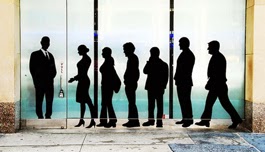
    Graffiti - Murals - Plus

    Graffiti is writing or drawings scribbled, scratched, or sprayed illicitly on a wall or other surface in a public place. Stickers and other adhesives are not considered graffiti. Graffiti ranges from simple written words to elaborate wall paintings, and has existed since ancient times, with examples dating back to Ancient Greece and the Roman Empire. In modern times, paint, particularly spray paint, and marker pens have become the most commonly used graffiti materials. In most countries, marking or painting property without the property owner's consent is considered defacement and vandalism, which is a punishable crime. Graffiti may also express underlying social and political messages and a whole genre of artistic expression is based upon spray paint graffiti styles. Within hip hop culture, graffiti has evolved alongside hip hop music, b-boying, and other elements. Unrelated to hip-hop graffiti, gangs use their own form of graffiti to mark territory or to serve as an indicator of gang-related activities. Controversies that surround graffiti continue to create disagreement amongst city officials/law enforcement and writers who wish to display and appreciate work in public locations. There are many different types and styles of graffiti and it is a rapidly developing art form whose value is highly contested, reviled by many authorities while also subject to protection, sometimes within the same jurisdiction The murals that are seen throughout the world do not engender the same controversy. For the most part they are requested or commissioned. Many cities such as Philadelphia have an established mural arts program. Also in this gallery I will include advertising and posters which in many cases I consider artistic. Art or vandalism ? You be the judge. You can tell how I feel by how I title the photograph.

    Lady Liberty

    A tribute in pictures to "The Lady" who greets all that enter New York harbor. If an image has the FAA watermark in the lower right hand corner it will NOT appear on any print you purchase.

    New Jersey

    This gallery is devoted to the real New Jersey that is loved and appreciated by the people who live and visit there. I also have a gallery devoted solely to the Jersey Shore as well as the FAA group New Jersey administered by me. To see many more wonderful fine art images of New Jersey please visit both.

    New York City Scenes

    Images from the most exciting city in the world "The Big Apple", New York City

    Sidewalk Catwalk

    Another example of why it's so much fun to live close to NYC. There is always something going on. NY is particularly engaged in presenting various outside art shows. There has been the Gates exhibit in Central Park 2005, Sculpture on Park Avenue in 2009, The Cow Parade held all over the city in 2008 and in the summer of 2010 there was a "Sidewalk Catwalk" which was a display of mannequins dressed by famous fashion designers on Broadway for several weeks and the subject of this gallery. It's always fun for a photgrapher in NYC If an image has the FAA watermark in the lower right hand corner it will NOT appear on any print you purchase.

    Urban Art

    " Where passion pulls follow ,never question this, it may be the only chance in your life to be truely alive with the source pulsing through your veins. Even if the journey goes down a futile path, it still is not in vain." From the poem The Art of Art by Adryan Rotica. That poem to me express the creativity and passion of the street artist. This gallery is devoted to the various expressions of art you will find in the cities. Be it grafitti, murals, commissioned or otherwise, and even advertisements on buildings. They are all forms of art you will find in the cities. If an image has the FAA watermark in the lower right hand corner it will NOT appear on any print you purchase.

    Thursday, 19 February 2015

    N Y C Subway Mosaic


    N Y C Subway Mosaic


    Many New York City Subway stations are decorated with colorful ceramic plaques and tile mosaics. Of these, many take the form of signs, identifying the station's location. Much of this ceramic work was in place when the subway system originally opened on October 27, 1904. Newer work continues to be installed each year, much of it cheerful and fanciful.

    These tiles are located in the subway walkway beneath the Port Authority Bus Terminal.


    Friday, 13 February 2015

    NYC Subway System - Allen Beatty


    Subway Sign

    A New York City subway sign on 42nd street and 8th avenue indicating all the lines that can be boarded at this station.


    Subway Entrance

    Times Square and 42nd Street is a large station complex of the New York City Subway, located under Times Square at the intersection of 42nd Street, Seventh Avenue, and Broadway in Midtown Manhattan. When considered together with 42nd Street Port Authority Bus Terminal, it is the busiest complex in the system, serving 60,604,822 passengers in 2011.

    The complex provides free transfers between the IRT 42nd Street Shuttle, the BMT Broadway Line, the IRT Broadway Seventh Avenue Line and the IRT Flushing Line, with a long transfer to the IND Eighth Avenue Line one block west at 42nd Street Port Authority Bus Terminal. It is served by the:

    1, 2, 3, 7, N, and Q trains at all times
    R and 42nd Street Shuttle trains at all times except late nights
    7 trains during rush hours in the peak direction


    Son This Is The Real Train

    Grand Central Terminal , colloquially called Grand Central Station, or shortened to simply Grand Central, is a commuter rail terminal station at 42nd Street and Park Avenue in Midtown Manhattan in New York City.

    Built by and named for the New York Central Railroad in the heyday of American long-distance passenger rail travel, it is the largest train station in the world by number of platforms:44, with 67 tracks along them. They are on two levels, both below ground, with 41 tracks on the upper level and 26 on the lower, though the total number of tracks along platforms and in rail yards exceeds 100. The terminal covers an area of 48 acres .

    The terminal serves commuters traveling on the Metro-North Railroad to Westchester, Putnam, and Dutchess counties in New York State, and Fairfield and New Haven counties in Connecticut. Until 1991 the terminal served Amtrak, which moved to nearby Pennsylvania Station upon completion of the Empire Connection.

    Although the terminal has been properly called Grand Central Terminal since 1913, many people continue to refer to it as Grand Central Station, the name of the previous rail station on the same site, and of the U.S. Post Office station next door, which is not part of the terminal. It is also sometimes used to refer to the Grand Central 42nd Street subway station, which serves the terminal.

    According to the travel magazine Travel + Leisure in its October 2011 survey, Grand Central Terminal is "the world's number six most visited tourist attraction", bringing in approximately 21,600,000 visitors annually.


     New York City Scenes - Gallery

    Images from the most exciting city in the world "The Big Apple", New York City